![]() |
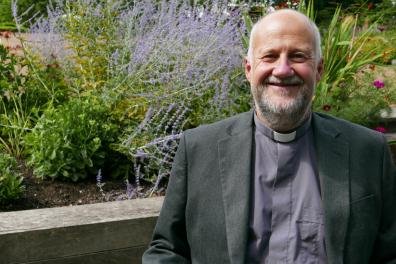
Don’t be afraid to talk about death and funerals, advises the Bishop of Rochester, the Rt Revd James Langstaff, writing in support of Dying Matters Awareness Week (13-19 May 2013).
Bishop James, the Chair of the Churches Funeral Group said: “…This week encourages us all to think about how we approach the prospect of our own death and that of those closest to us; it is good and healthy to talk about these things together…”
Dying Matters, a broad-based and inclusive national coalition of 28,000 members, including the Church of England, aims to change public knowledge, attitudes and behaviours towards dying, death and bereavement.
|
Bishop James wrote: “The Church of England has been pleased to support Dying Matters Awareness Week since it began. People often prefer not to think or talk about death, but it is something that we all have to face and that is best done honestly and openly. This week encourages us all to think about how we approach the prospect of our own death and that of those closest to us; it is good and healthy to talk about these things together.
Reflecting on how the Church of England conducts more than 3,000 funerals every week (see two case studies from clergy below), he said: “In every community in the country, our parish clergy, chaplains and lay ministers are ready to share this journey with people thinking about their own dying or facing bereavement - whether or not they are churchgoers. Many local churches have trained visitors and listeners who will offer time and care to the dying and bereaved.
He added: “We believe that our Christian faith helps people both to live well and to die well – it offers a message of hope as we face the realities of our mortality. A Christian funeral service (whether in church or at a crematorium) is an opportunity to give thanks for a person’s life and commend them to God with hope and prayer. Thinking ahead about such a service for yourself or a loved one is a good and positive thing to do.”
Rev Dr Sandra Millar, Head of Projects and Developments (Archbishops’Council), said: "It's really strange that although death is the one certainty for all of us, we are so wary of talking about it. But Dying Matters Awareness Week reminds us that talking about it is helpful, and leaving ideas about how you want your funeral service to be is a great gift to those left behind. The Church of England has been talking to people about death and funerals as part of its work on the Funerals Project, and discovered that for many people knowing that the service really reflects their loved one's life is a great comfort. Vicars are used to talking about the big questions and the small details, so don't hesitate to ask your local vicar for advice.”
Two case studies written by experienced clergy also appear on the Church of England website alongside the Bishop’s words:
CASE STUDY 1: Revd Juliet Stephenson, Vicar of Newnham, Gloucester Diocese
“As a parish priest, I see the ministry surrounding death one of the most privileged things I do. When I am told that someone is ill, and may like a visit, I arrive often unannounced, and expect nothing in particular. I will react to whatever I come up against. I have never been asked to leave. I have always been invited into the most private of moments, and I am always grateful to those who make this possible. I appear often in jeans and a dog collar, and just ‘be’ with them. People want to talk. They want to ask questions. They want to share their experiences of illness, and ask about what will happen. A wonderful example is of a family who wanted lots of elements added to the funeral service for their loved one. So we had the service on a Saturday, and we filled with church with meadow flowers. The undertaker enabled the family to carry a wonderful organic coffin in and out of church to loud rock music, which was provided by our resident pub DJ, the local community choir sang some beautiful ancient and contemporary pieces, we had lyrics of folk songs read as poems, and we made the service together. The service was one filled with hope. This death was one that was certainly not wanted, and most definitely fought against bravely. But this death was lived well by the whole family. I think this set a benchmark for those who came, to truly see that a church service can be fitting for everyone. And I think the church can provide very well indeed for those who are religious or not religious, who seek something traditional or different. There is something significant in itself by holding a funeral in a church rather than a crematorium chapel, or at a graveside. That family will always have this sacred space to recall the hour or so of pure love and thanksgiving that was shown to their loved one. For me, I know that the care and time spent with those grieving and those preparing for their own death are hours well spent. Our pastoral responsibility as parochial ministers is shown in its fullness through the business of death. I wouldn’t have it any other way.”
CASE STUDY 2: Revd Hanna Woodall, vicar of Foleshill, Coventry Diocese
“I was a part-time chaplain at Myton Hospice for three years offering spiritual support to all. When I visited the hospice people would see the dog collar and it opened doors to countless conversations. I’d talk with around 40 people per week, who generally hadn’t thought about their funeral and future wishes. They were really pleased to talk about it all and have their questions answered. It was particularly wonderful to be able to tell people that they didn’t need to be a churchgoer to have a church funeral service. Sometimes people talked more with me than they had done with anyone else. Our talks helped them to initiate further conversations with relatives and friends. My conclusion was that talking to people about end of life matters didn’t upset them, and they were pleased to have someone help them to make some decisions about what will happen. They were more at peace about everything.”
Don’t be afraid to talk about death and funerals, advises the Bishop of Rochester, the Rt Revd James Langstaff, writing in support of Dying Matters Awareness Week (13-19 May 2013). Bishop James, the Chair of the Churches Funeral Group said: “…This week encourages us all to think about how we approach the prospect of our own death and that of those closest to us; it is good and healthy to talk...